By Dr. Caroline, DVM, CVA, Pet's Favorite Vet & Play Place, Spartanburg, SC
Quick answer: To keep pets safe on Halloween, keep dogs and cats away from the front door, leave dogs out of door-to-door trick-or-treating, and keep all candy out of reach. The most dangerous Halloween treats for dogs are sugar-free candy with xylitol (also labeled birch sugar), raisins or grapes, and dark or baker's chocolate. If your pet eats any of these, call your vet or a pet poison hotline right away.
Halloween is just around the corner, and all of our favorite ghoulies and ghosties are getting ready to either enjoy the treats we provide or menace us with a pestering trick. Our four-legged family members need to be included in our trick-or-treat planning, too.
Should you take your dog trick-or-treating?
One of the most important things to remember on Halloween is that not everyone who comes to your door, or answers the doors you visit, will be happy to see your dog. Some dogs love putting on their costumes and traveling with their families around the neighborhood, but I recommend leaving your dog out of door-to-door trick-or-treating. At the very least, keep your dog back on the sidewalk or street. You never know if the person answering the door is afraid of dogs or has a dog that will run up and greet yours in a less-than-friendly fashion.
How do you keep your dog calm when trick-or-treaters come to the door?
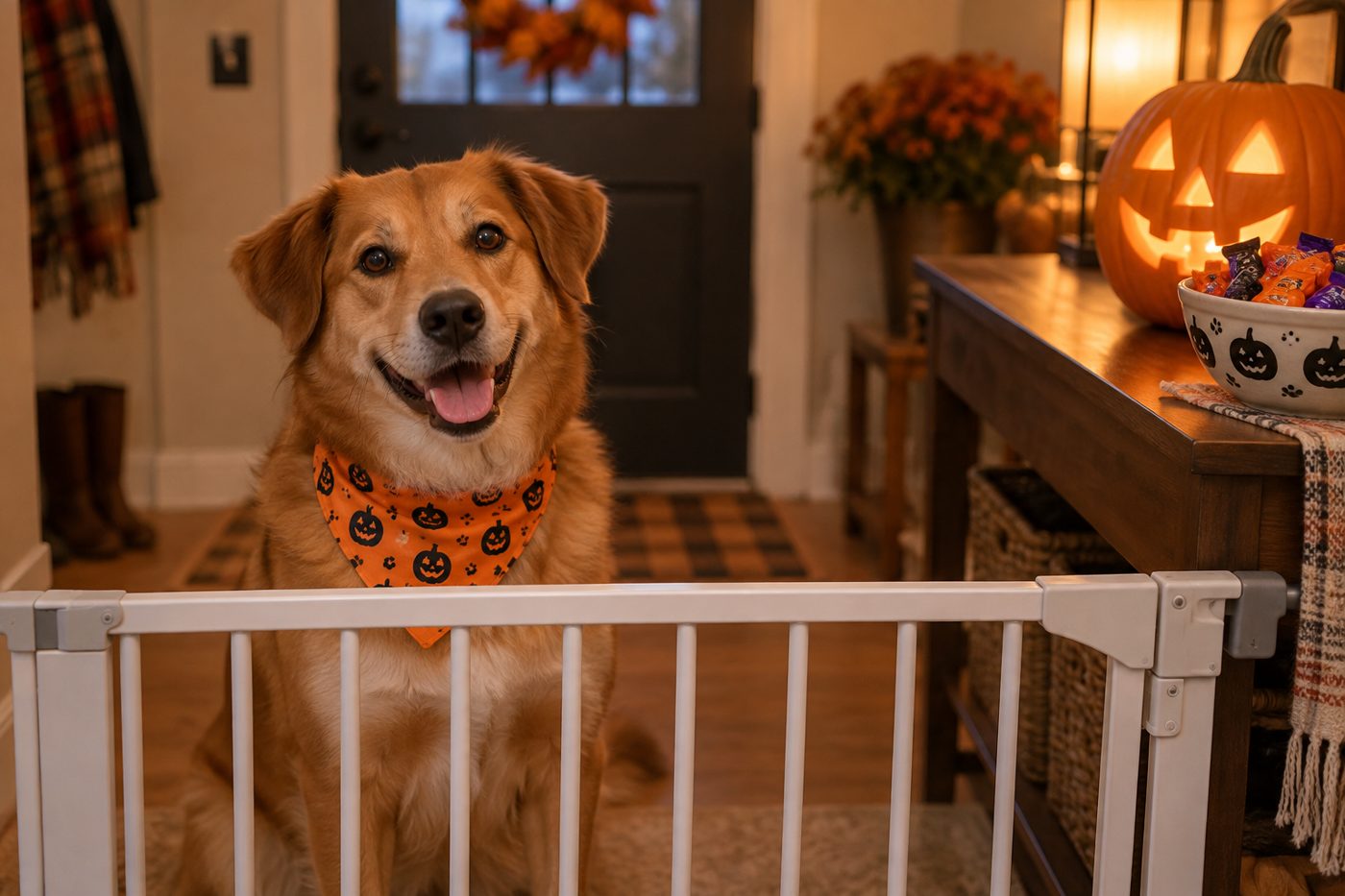
Speaking of door greetings, it's also best to keep your dog away from the front door while you hand out candy. Even if your dog loves kids and other dogs, they may be startled by costumes or unfamiliar animals, or slip away from you when you open the door to a pack of witches and cowboys. A closed room, a crate or a baby gate works well.
Is Halloween candy dangerous for dogs?
The other thing to watch out for on Halloween is the candy. First of all, as the parent of a six-year-old, I firmly believe all candy should be checked before you let your children eat it. I know that in the '90s we were all told people were hiding razor blades and drugs in candy, which seems too expensive and too much work to me. Still, be sure to protect your children.
When it comes to protecting your four-legged children, it's best that they not get any candy at all. That said, for most candy, one piece won't cause a big problem. A few ingredients are the exception.
Xylitol (birch sugar): the most dangerous Halloween ingredient for dogs
We get concerned when dogs eat sugar-free candy or gum that contains xylitol. Xylitol is also often labeled as birch sugar. It is toxic to dogs and can kill them. Check the labels on anything sugar-free in the candy bag.
Raisins and grapes
The other severely toxic items you may find in your child's candy bag are raisins or grapes. I know your kid won't be excited about the house that hands out raisins, but don't let them become a snack for your pet. Grapes and raisins can cause kidney failure in dogs, and even a small amount can be dangerous.
How much chocolate is toxic to a dog?
Most people worry about chocolate. Unless your dog is under 10 lb, one piece of milk chocolate usually won't cause more than an upset tummy. The bigger concerns are larger amounts or purer chocolate, and the most dangerous is baker's chocolate. If your dog gets into chocolate, use the Merck Veterinary Manual chocolate toxicity calculator to see whether the dose is toxic, and call us if you're unsure.
What are the Halloween risks for cats?
Think we forgot about the cats? Of course not! The main Halloween risk for cats is escaping while the door opens and closes all night. Keep your kitties shut away from the front door while you're handing out candy.
What should you do if your pet eats Halloween candy?
- Figure out what your pet ate and roughly how much. Keep the wrapper.
- For chocolate, check the dose with the Merck calculator.
- For anything with xylitol or birch sugar, raisins or grapes, call your vet right away. Don't wait for symptoms.
- After hours, contact an emergency vet or the ASPCA Animal Poison Control Center at (888) 426-4435 (a consultation fee may apply).
🎃 Anything about your pet got you spooked?
Schedule a time with the (not so) witch doctor!Or call us at (864) 686-8583.
Halloween pet safety FAQ
Can dogs eat Halloween candy?
No. It's best for dogs not to eat any candy. One piece of most candy usually isn't an emergency, but sugar-free candy with xylitol, raisins and dark or baker's chocolate can be dangerous.
What is birch sugar, and is it safe for dogs?
Birch sugar is another name for xylitol. It is toxic to dogs and can be deadly, even in small amounts.
Is one piece of chocolate bad for my dog?
For dogs over 10 lb, one piece of milk chocolate usually causes no more than an upset stomach. Dark chocolate, baker's chocolate, larger amounts and small dogs are a bigger concern. Check the dose with the Merck Veterinary Manual chocolate toxicity calculator.
Should I take my dog trick-or-treating?
It's best not to take your dog door to door. If your dog comes along, keep them back on the sidewalk, because the people (and pets) answering doors may not welcome a dog.
How do I keep my cat safe on Halloween?
Keep cats in a closed room away from the front door so they can't slip out while trick-or-treaters come and go.


